Gas Cylinder Blue & Orange Line Icon: Essential Design Asset
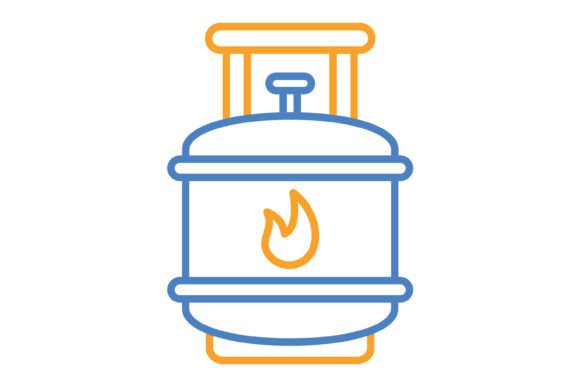
Every designer knows the struggle of finding the perfect icon that balances clarity with personality. The Gas Cylinder Blue & Orange Line Icon strikes that balance beautifully. This isn't just another generic symbol floating around the internet—it's a carefully crafted visual element that communicates fuel, energy, and industrial functionality at a glance. The blue and orange color pairing works exceptionally well here, creating immediate visual distinction while maintaining professional appeal across various applications.
Visual Characteristics That Make This Icon Stand Out
What catches your eye first? Probably the clean line work combined with that striking dual-tone approach. The blue foundation suggests reliability and technical precision, while the orange accents inject warmth and urgency—perfect for an icon representing combustible fuel. The lines maintain consistent weight throughout, which matters more than you might think. Inconsistent stroke widths can make an icon look amateurish when scaled across different sizes, whether you're placing it on a mobile app interface or enlarging it for a presentation slide.
The overall personality leans toward modern and functional without feeling cold or overly technical. This makes the Gas Cylinder Blue & Orange Line Icon versatile enough for corporate safety manuals and creative enough for a startup's branding materials. The transparent background version (PNG format) proves particularly valuable when layering the icon over photographs or complex backgrounds where a white box would disrupt the visual flow.
Where This Icon Performs Best
Let's talk practical applications because that's where design assets earn their keep. If you're building a mobile app for fuel delivery services, industrial equipment rental, or even a camping supply store, this icon immediately communicates your service category without requiring text explanation. Website designers working on energy sector clients will appreciate how the icon integrates into navigation menus, feature sections, and call-to-action buttons without overwhelming surrounding typography.
Print applications deserve equal attention. Think about safety placards, instructional materials, equipment manuals, or packaging design for gas-related products. The Gas Cylinder Blue & Orange Line Icon reproduces cleanly at various sizes, which matters when you're printing on small labels versus large format posters. Entrepreneurs creating presentation decks for investors in the energy or industrial sectors can use this icon to maintain visual consistency throughout their slides while reinforcing their brand identity through repeated, recognizable imagery.
Working With Multiple File Formats
The included ZIP file delivers five different formats, and each serves a distinct purpose in your workflow. The AI and EPS files give you full vector editing capability—resize without quality loss, adjust colors to match your brand palette, or modify individual line elements. These formats work seamlessly in Adobe Illustrator and most professional design software.
The SVG format has become indispensable for modern web design. It scales perfectly on responsive websites, loads faster than raster alternatives, and plays nicely with CSS styling. Web developers particularly appreciate SVG icons because they can change colors dynamically based on user interactions or dark mode preferences.
For quick implementation without design software involvement, the JPG and PNG versions cover your immediate needs. The transparent PNG proves especially useful for content creators and bloggers who need to drop icons into articles, social media graphics, or email templates without wrestling with clipping paths or background removal.
Practical Guidance for Implementation
Before incorporating the Gas Cylinder Blue & Orange Line Icon into your project, consider these real-world observations. First, evaluate your existing visual language. If your brand identity relies heavily on warm tones exclusively, the blue element might feel disconnected—but that's easily addressed through the editable vector formats. Conversely, if your design system already uses blue and orange, this icon integrates almost seamlessly.
Font pairing matters when placing icons alongside typography. The clean, geometric nature of this icon complements sans serif fonts particularly well. Think about pairing it with typefaces like Montserrat, Open Sans, or Roboto for a cohesive modern typography approach. If your project calls for more traditional styling, certain serif fonts with moderate contrast can work, though you'll want to avoid overly decorative script fonts or handwritten fonts that might clash with the icon's technical personality.
Test the icon at multiple sizes during your design process. What looks crisp at 64 pixels might lose detail at 16 pixels, especially if you're using it as a favicon or small UI element. The 100% vector construction means you can experiment freely without worrying about pixelation—just zoom in and refine as needed.
Building Consistency Across Your Projects
One icon rarely exists in isolation. If the Gas Cylinder Blue & Orange Line Icon fits your project, explore whether complementary icons from the same design family exist. Consistent icon sets—matching line weights, color approaches, and stylistic details—elevate brand identity from scattered visuals to cohesive design systems. This consistency directly influences how professional your materials appear to clients, customers, or audiences.
For small business owners and entrepreneurs managing their own visual materials, having reliable, ready-to-use design assets saves hours of searching, editing, or commissioning custom work. The five included formats mean you can hand off the appropriate file type to different team members or vendors without back-and-forth conversion requests.
Whether you're designing social media graphics, updating a website, preparing printed collateral, or building presentation templates, the Gas Cylinder Blue & Orange Line Icon delivers genuine utility. It's not about having the most icons—it's about having the right ones that communicate clearly and integrate smoothly into your creative workflow.