Diary Glyph Icon: Your Essential Design Asset for Every Project
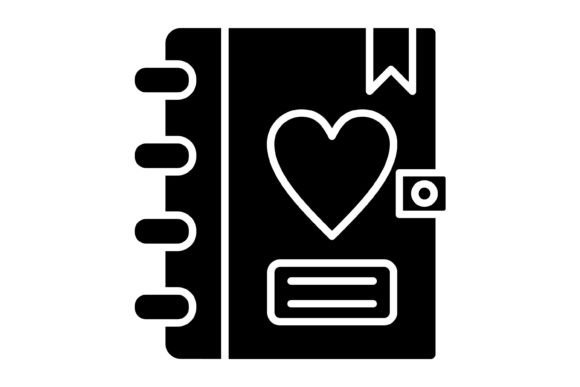
In the world of digital and print design, a single, well-crafted icon can communicate an idea faster than a paragraph of text. That's the core strength of the Diary Glyph Icon. It’s not just a simple picture; it’s a versatile design asset built for clarity and impact. Visually, this icon is clean, modern, and universally recognizable. It typically represents writing, planning, record-keeping, or personal notes, making it a powerful tool for guiding user attention in interfaces or anchoring visual themes in branding. Its personality is professional yet approachable, avoiding overly complex details that can muddy its message, especially at smaller sizes. This is the kind of premium font asset that quietly elevates a project's polish.
Where This Glyph Icon Truly Shines
The true value of the Diary Glyph Icon is its adaptability. It’s designed as a foundational piece for a wide range of applications, ensuring your projects look cohesive and intentional. Consider how it integrates into different contexts:
- Digital & Web Design: As a cornerstone of modern web design and mobile apps, it serves perfectly for navigation menus, feature highlights, or blog section indicators. Its transparent PNG and scalable SVG formats ensure it looks crisp on any screen, from a smartphone to a 4K monitor. For a creative font icon system, this is essential.
- Branding & Marketing: For entrepreneurs and small business owners, this icon can become a key part of a brand identity. Imagine it on a planner's packaging, as a favicon for a coaching website, or within social media graphics promoting a workshop. It helps build recognition and conveys organization and thoughtfulness.
- Publishing & Editorial: In editorial design, such as magazines, reports, or PDF guides, the glyph can be used to denote sidebars, tips, or recurring sections. It adds a layer of professional visual hierarchy without competing with the primary typeface, whether that's a serif font for tradition or a sans serif font for modernity.
- Presentations & Templates: Adding this icon to slide decks or document templates instantly boosts their perceived value. It signals to your audience that you care about details, enhancing engagement and making information easier to digest. It’s a simple trick for a more professional appearance.
Making It Work: Practical Integration Tips
Having the right design assets is one thing; using them effectively is another. Here’s how to get the most out of the Diary Glyph Icon.
First, always consider font pairing in a broader sense. While this is an icon, its style should complement your chosen typography. If your project uses a clean, geometric sans serif font, the icon's lines should align with that aesthetic. If your brand employs a more organic handwritten font or script font, you might use the icon more sparingly, perhaps as a subtle accent. The goal is harmony, not competition.
Second, leverage the file formats strategically. The vector formats (AI, EPS, SVG) are your best friends for scalability and color editing. Use the SVG for web and app interfaces for the smallest file size and perfect clarity. The JPG is useful for quick mockups or presentations where a transparent background isn't needed. The PNG with a transparent background is ideal for layering over images or colored backgrounds in print or digital layouts.
Finally, think about context and size. A glyph icon that is perfectly clear at 32x32 pixels on a website may lose its details when printed at a tiny size on a business card. Always test your layouts at the intended output size. The strength of a well-designed icon like this lies in its ability to maintain its meaning and visual integrity across all these scenarios, from a large banner ad to a small app button. It’s a fundamental piece of modern typography and visual communication, ready to be deployed.